Vinegar
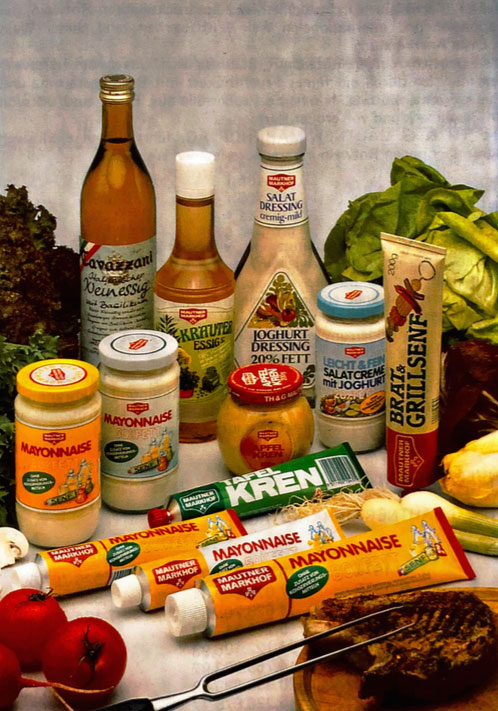
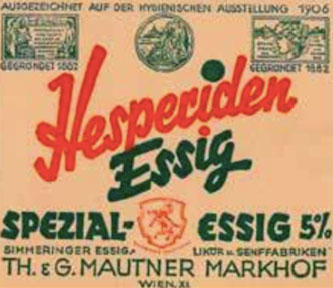
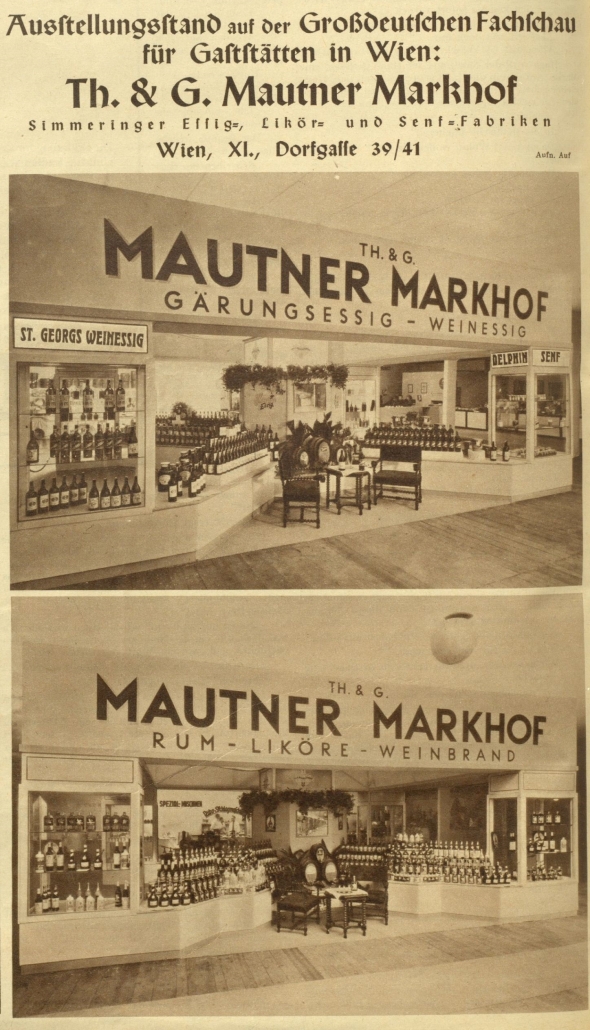
Vinegar production in the 19th century was the result of surplus beer and spirit production. It was discovered that alcohol reverts to vinegar if it is stored unused for a longer period of time. This process could be accelerated with a so-called ‘mother of vinegar’ (acetic acid bacteria). Back then, vinegar was mainly used to preserve vegetables (pickling cucumbers, sauerkraut, etc.). If the vinegar is left to rest, it turns back into sugar (e.g. balsamicum, which actually consists of nothing but sugar and is therefore unjustly praised). If yeast bacteria are added to the sugar, they produce alcohol – thus completing the cycle.
Mustard
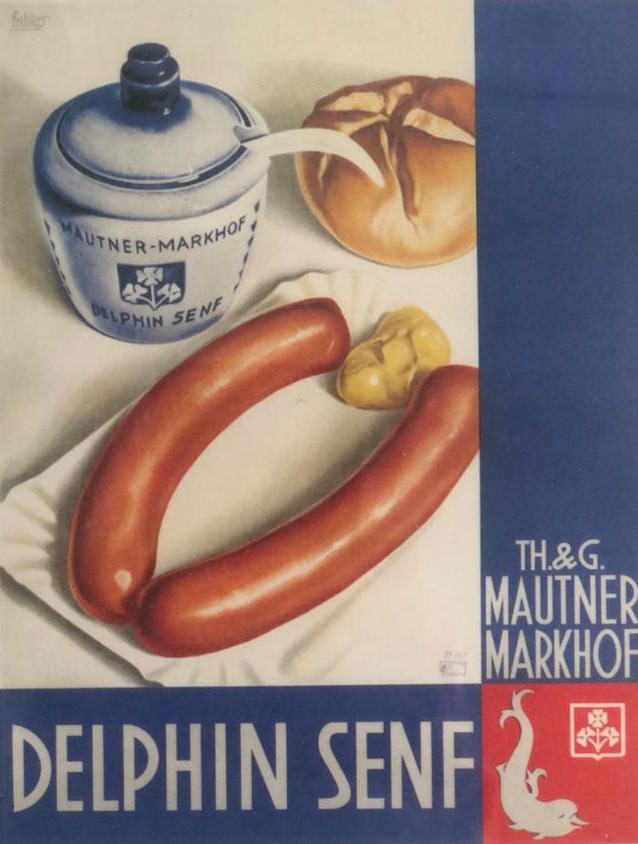
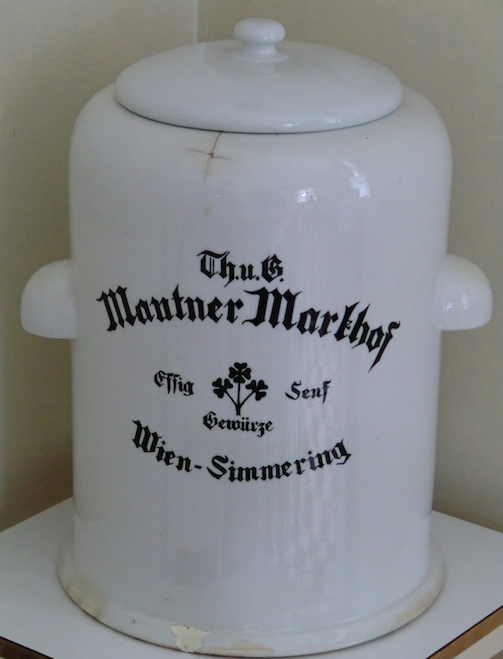
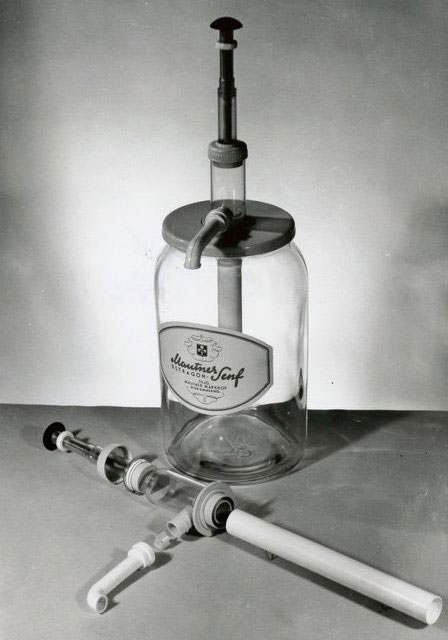
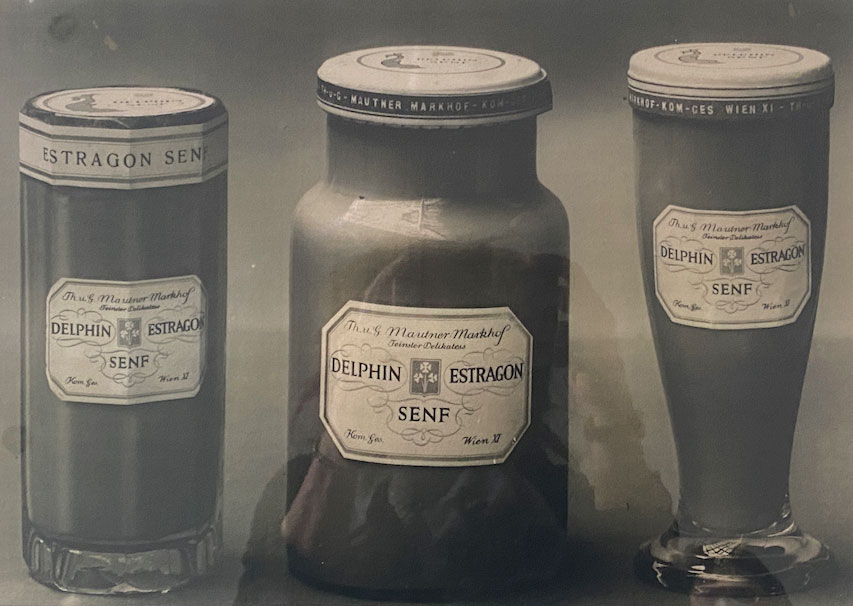
Mustard is ground from mustard seeds and vinegar is added to preserve it. At first, it was sold in small and large ceramic containers. However, the big breakthrough came when Mautner Markhof started filling it in tubes. Virtually overnight, the company became the market leader, as it could no longer dry out in the container.
Horseradish
As early as the 1930s, horseradish was bought in, chopped and pickled in vinegar. However, production was stopped during the war and only resumed on a large scale in the 1960s. It was sold in practical sealable jars.
Salad dressings
The range consisted of marinades in a wide variety of flavours from our own production. All a mixture of vinegar, oils and spices.
Various trade brands
Fruit syrup
In order to produce alcohol, fruit had to be mashed (squeezed). It was discovered that if sugar was added to the fruit juice and water removed by boiling, it could be kept for several years if sealed airtight. This gave rise to Mautner Markhof fruit syrups. For Sunkist, the company was one of the first licence producers for orange juice in tetra packs. Very early on, the company also produced for the Swiss company Sinalco, but this was discontinued at the end of the 1970s as the Schwechat brewery produced carbonated fruit drinks under the name Soma.
Spirits
Spirits are all alcoholic drinks that can be found in a bar. We had the licence to produce Bols (liqueurs, gin and Genevea), Campari (herbal liqueur) and Kupferberg Sekt (sparkling wine). Our own brands included Charly liqueurs (with the top seller egg liqueur), Mautner Markhof, Bouchet brandy and the Donaufürst (white) and Maskaron (red) wine brands. Laurent Perrier champagne, Jack Daniels, Ballantine’s whiskey and La Ina sherry from Pedro Domecq were traded (imported).
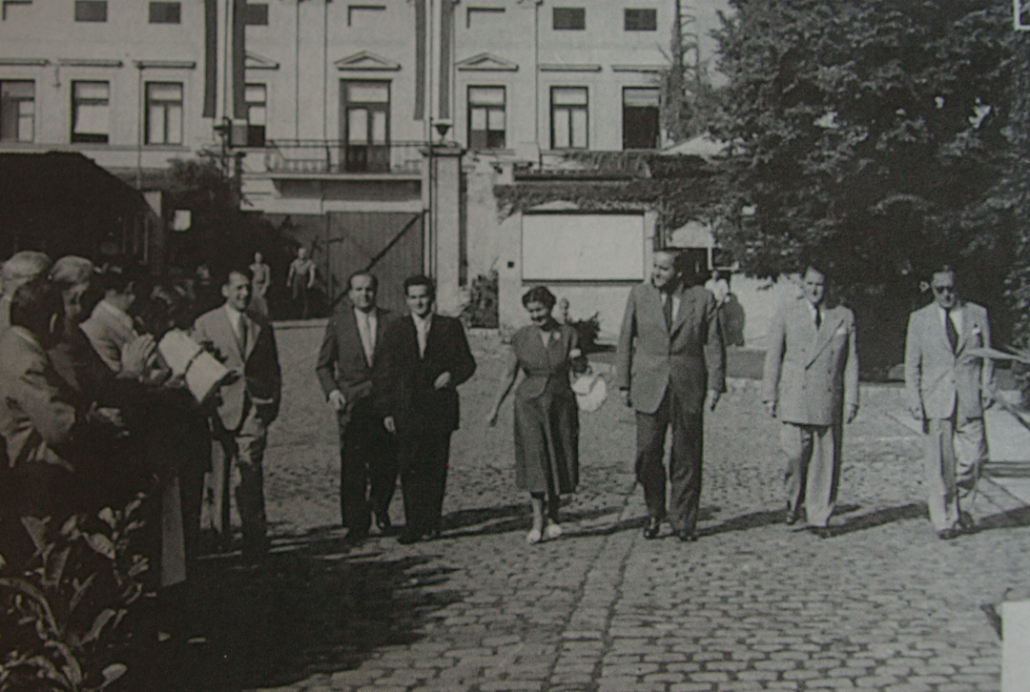
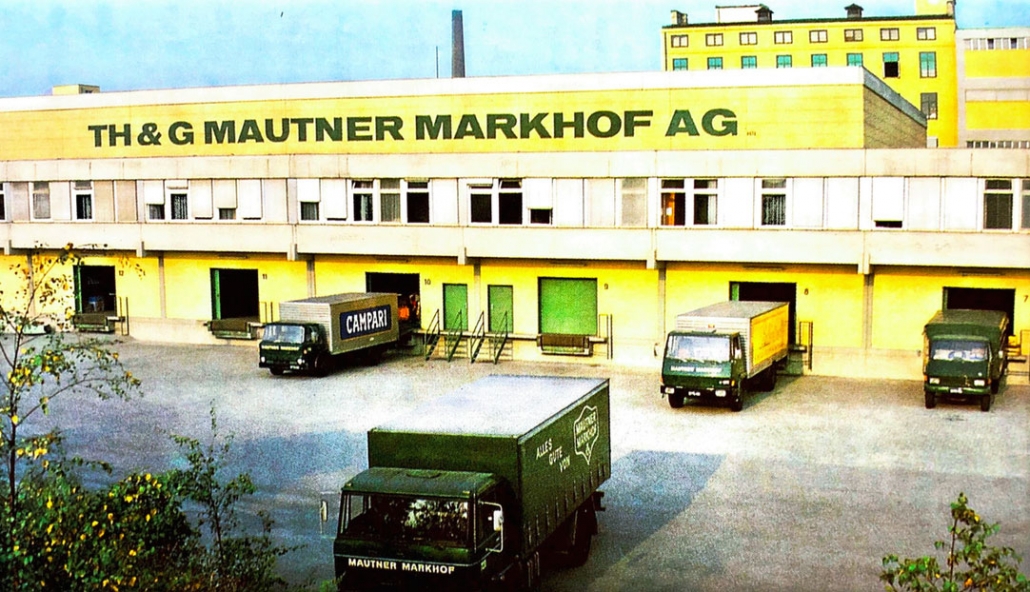
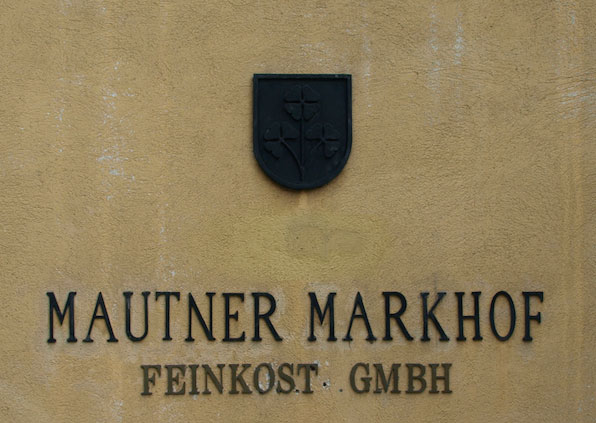
All these product groups were successfully united under one roof in Th & G Mautner Markhof KG. With EU accession, however, the market situation changed abruptly. On the one hand, the company was no longer needed as a licence producer and, on the other hand, new networks of distributors were formed to which the trademarks had to be sold. After accession, attempts were made to restructure the company and replace the lost trademarks with own brands. For example, instead of Kupferberg, Markhof’s sparkling wine was launched, with the slogan ‘Markhof’s Magic Moments’. However, after the product had been well introduced, the management was unable to maintain the good quality of the first production series, which meant that it had to be withdrawn from the market after some time. A notable recommendation (from a consultant of Meinl Bank) to invest in various sauces was unfortunately not followed up, which was thought-provoking, as Mautner Markhof’s delicatessen production was ultimately bought by Develey Senf & Feinkost GmbH, McDonald’s in-house supplier of sauces, in 2001. Since then, the Munich-based family business has continued to produce many products under the established (family) brand name on a small part of the former Simmering premises.

Memories of Theodor Heinrich Mautner Markhof, May 2025
I first gained a closer insight into the ‘Simmering’ business when, as an advertising aspirant in the late 1970s/early 1980s, I was able to get to know the authorised signatory of Th & G MM, Mr Jonas, alongside the great Dr Zotti. Although Georg J. E. was managing director, he ran the business more or less alone in his role as authorised signatory. His responsibilities included the management of sales, production, marketing and controlling. As far as marketing was concerned, there were only two people responsible for it at the time, based on the dual control principle: Dr Zotti on the agency side and Mr Jonas on the client side. As all implementation was outsourced to ´Hager´(my father´s advertising agency), Jonas did not need assistants, research teams or creatives, thus saving unnecessary fixed financial costs and time resources. During my career, I have realized time and time again that all companies that have their marketing handled by teams end up with high personnel costs and lengthy meetings, as marketing encourages everyone to express their opinions and present themselves. In reality, it only takes one competent and decisive person to keep a business running. When marketing teams were set up at Th & G in the 1990s in line with the trend, this had a drastic negative impact on processes and output.